
Living just eight miles from Fenwick Island has its perks but it also means your home takes on weather that inland Delaware never sees. Wind-driven rain off the coast, salt in the air, and the kind of sudden summer downpours that roll up Route 54 all put your gutters to work harder than most people realize. And when those gutters aren’t up to the job, the water doesn’t just disappear. It finds your fascia, your foundation, and your basement.
If you’re a Selbyville homeowner thinking about new gutters, this guide walks through why seamless gutters are the right call for a coastal Sussex County home, what local conditions you need to plan for, and how to choose an installer who actually understands the area not just someone driving in from two counties over.
Why Seamless Gutters Make Sense for Selbyville Homes
Let’s start with the basics, because this is the single biggest decision you’ll make. Traditional sectional gutters come in pre-cut pieces that get joined together with seams every few feet. Seamless gutters are formed on-site from one continuous piece of aluminum, custom-cut to the exact length of each run on your house.
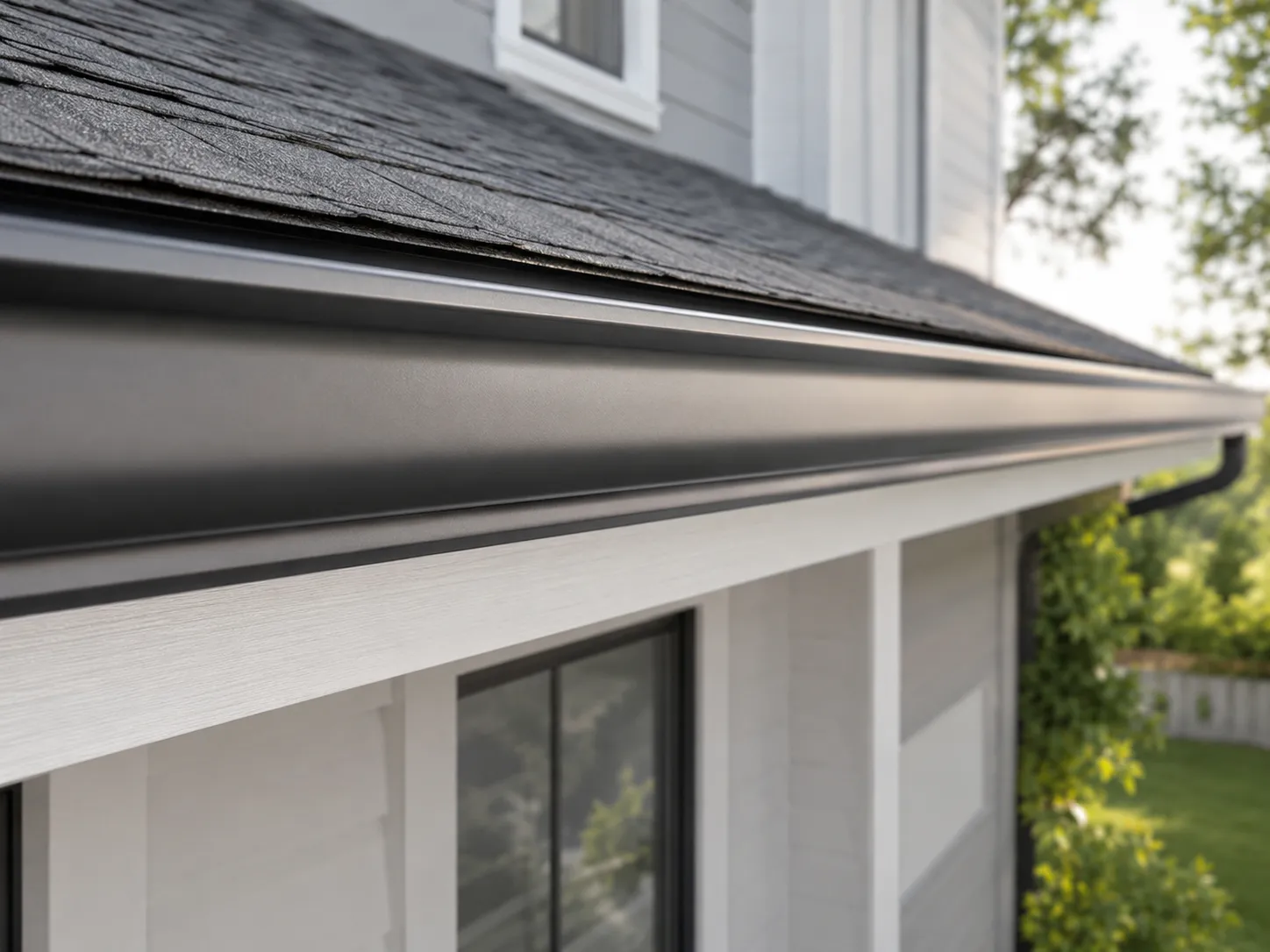
Why does that matter here specifically? Because every seam is a potential leak point, and Selbyville’s coastal weather attacks those weak spots relentlessly. Wind-driven rain forces water sideways into seams that would stay dry in a calmer climate. Salt in the air speeds up corrosion at those joints. And the freeze-thaw swings we get in a Delaware winter work seams loose over time.
With seamless gutters, you eliminate almost all of those joints. The only seams left are at corners and downspout outlets, which dramatically reduces the number of places water can escape. For a home this close to the coast, that’s not a luxury upgrade it’s the difference between a gutter system that lasts and one you’re patching every couple of years.
The Material Question: Aluminum, Copper, or Vinyl?
Most Selbyville homes do best with seamless aluminum. It’s rust-resistant (important in salt air), lightweight, affordable, and holds up well to coastal conditions. Copper is a beautiful, extremely long-lasting option if you want a premium look and have the budget for it. Vinyl, on the other hand, tends to become brittle and crack under UV exposure and temperature swings not ideal for a coastal climate that sees strong summer sun and winter cold.
Local Factors Selbyville Homeowners Should Plan For
This is where a lot of out-of-town installers get it wrong. Selbyville isn’t a generic suburb it sits in a specific coastal environment that changes what your gutter system needs to handle.
Salt air and corrosion. Being on the Delaware-Maryland line just north of Fenwick Island means salt carries inland on the breeze. Over years, that salt accelerates corrosion on cheaper materials and poorly sealed seams. Corrosion-resistant aluminum and quality sealing at the corners matter more here than they would in, say, Georgetown or Milford.
Flat terrain and drainage. The land around Selbyville is famously flat it’s part of the Atlantic coastal plain. Flat lots don’t shed water the way sloped ones do, which means your downspouts and drainage extensions have to do more of the work to carry water away from the house. Getting the downspout placement and slope right is critical on a flat Sussex County lot.
Floodplain awareness. Parts of Selbyville fall within mapped floodplains the Town of Selbyville and DNREC both maintain flood-risk resources for exactly this reason. If your property sits in or near a flood-prone area, your gutter and drainage system is one more line of defense keeping surface water managed and directed away from your foundation.
Storm intensity. Coastal storms and the tail ends of tropical systems that track up the Eastern Shore can dump a lot of water fast. An undersized gutter or a single narrow downspout simply can’t move that volume, and the overflow ends up exactly where you don’t want it.
Common Gutter Problems We See Around Selbyville and Sussex County
When gutters fail on Selbyville-area homes, the damage tends to follow a familiar pattern. Here’s what we run into most often:
- Fascia and soffit rot repeated overflow keeps the wood behind your gutters wet, and in a humid coastal climate that wood doesn’t get a chance to dry out. Rot sets in, paint fails, and what started as a gutter issue becomes a carpentry bill.
- Sagging gutters the weight of standing water and packed debris pulls gutters loose from the fascia over time. It’s one of the most common calls we get, and coastal humidity makes it worse because debris stays wet and heavy.
- Foundation pooling and erosion on flat lots, water that isn’t carried far enough from the house just sits at the foundation, softening soil and, over time, contributing to settlement and basement moisture.
- Undersized or clogged downspouts a gutter is only as good as its drainage. Narrow or blocked downspouts back the whole system up.
- Siding stains overflow running down exterior walls leaves streaks and encourages moisture intrusion at wall joints.
The through-line in all of these is that a gutter problem is rarely just a gutter problem. Left alone, it spreads to the parts of your home that are far more expensive to fix.
Do You Need a Permit for Gutter Work in Selbyville?
For most straightforward gutter installation and replacement on an existing home, you generally won’t need a special permit it’s considered routine maintenance and repair. However, if your project ties into larger drainage work, new construction, or any grading that affects a mapped floodplain, that’s when Sussex County and the Town of Selbyville’s floodplain regulations can come into play.
The honest answer is that it depends on the scope of your specific project, and rules can change. A local installer who works in Selbyville regularly will know when a job is routine and when it needs a closer look at local requirements another reason to hire someone who actually knows the area rather than a contractor unfamiliar with Sussex County’s rules.
How to Choose the Right Gutter Installer in Selbyville
Not all gutter companies are the same, and the cheapest quote often turns into the most expensive lesson. Here’s what to look for:
They actually work in Selbyville. An installer who regularly services the Selbyville, Fenwick Island, and Bethany Beach corridor understands salt air, flat-lot drainage, and coastal storm loads. Someone driving down from northern Delaware for a one-off job usually doesn’t.
They form gutters on-site. True seamless gutters are custom-formed at your home to fit each run exactly. If a company is installing pre-cut sectional pieces, you’re not getting the seamless benefit.
They look at the whole system. A good installer checks your fascia condition, downspout placement, and drainage not just the gutter trough. On a flat coastal lot, where the water goes after it leaves the gutter matters as much as the gutter itself.
They’re properly licensed and local. Ask about licensing and local experience. A company rooted in the Delmarva region has a reputation to protect in the community and knows the specific challenges your home faces.
Why Selbyville Homeowners Choose The Gutter Pros
We’re a family-owned business rooted right here in the Delmarva region, and Selbyville is home turf for us. We install seamless aluminum gutters custom-formed on-site for each home, so your system fits your roofline exactly no unnecessary seams, no generic pre-cut pieces.
Because we work throughout Selbyville and the surrounding coastal communities, we build every system with local conditions in mind: corrosion-resistant materials for the salt air, downspout and drainage planning suited to flat Sussex County lots, and gutter sizing that can actually handle a fast-moving coastal storm. We also install LeafBlaster Pro and Gutterglove gutter protection systems for homeowners who want to cut down on debris and maintenance.
We handle the full picture too not just gutters, but the fascia, soffits, and downspouts that work alongside them so you’re not juggling multiple contractors to protect one house.
Frequently Asked Questions
How much does seamless gutter installation cost in Selbyville, DE?
Cost depends on the size of your home, the length of gutter runs, the material you choose, and whether any fascia repair or gutter protection is included. Seamless aluminum is the most cost-effective option for most Selbyville homes. The best way to get an accurate number is a free on-site assessment.
Are seamless gutters worth it for a coastal home?
Yes. With far fewer seams, seamless gutters have dramatically fewer leak points which matters more in a coastal climate like Selbyville’s, where wind-driven rain and salt air attack seams and joints faster than they would inland.
What’s the best gutter material for salt air near Fenwick Island?
Seamless aluminum is the most popular choice because it resists rust and stands up well to coastal conditions while staying affordable. Copper is an excellent premium option. Vinyl is generally not recommended for this climate because it becomes brittle over time.
How long does gutter installation take?
Most residential seamless gutter installations are completed in a single day, though larger homes or projects that include fascia repair or gutter guards may take longer.
Do I need gutter guards in Selbyville?
If your property has trees nearby especially pines, which are common across Sussex County gutter guards significantly reduce clogs and cut down on how often you need cleaning. On a flat coastal lot where drainage is already working hard, keeping gutters clear is well worth it.
Protect Your Selbyville Home Before the Next Coastal Storm
Your gutters are the first line of defense between coastal weather and everything you’ve invested in your home. On a flat Sussex County lot, just north of the beaches, that job is too important to trust to a generic, seam-heavy system or an installer who doesn’t know the area.
The Gutter Pros install seamless, coastal-ready gutter systems for homeowners throughout Selbyville and the surrounding Delmarva communities. If you’re ready to protect your home the right way, reach out for a free on-site assessment we’ll walk your property, look at how water moves around your home, and recommend a system built for exactly where you live.