
Winter roof maintenance in Sussex County comes down to three jobs: clear and secure your gutters, fix any loose shingles or flashing, and make sure the roof edge where the two meet is solid. Do them in late October or early November, before the first big nor’easter. Then check again after every major storm, and take a closer look in March.
That is the short answer. The rest of this guide explains why winter on the Delaware coast is harder on roofs than the thermometer suggests, which checks you can safely do yourself, and when it is time to call a roofer.
Winter Here Means Nor’easter Season
On the Delaware coast, winter rarely brings the heavy snow that roofing advice from colder states warns about. What it does bring is wind and water. The National Weather Service says nor’easters can happen at any time of year but are “most frequent and most violent between September and April,” with gale-force winds and heavy rain (National Weather Service).
We saw what that means this fall. The nor’easter of September 25–27, 2026 brought a 58 mph gust to Bethany Beach and flooded Route 1 badly enough to close it between Bethany and Dewey Beach (WHYY). Storms like that are hard on roofs in three ways:
-
Wind gets under shingles at the edges, corners and ridge, where it can lift them or tear them off.
-
Rain blows sideways, so it can be pushed under loose flashing and lifted shingles that normal rain never reaches.
-
Clogged gutters overflow, sending water behind the gutter, onto the siding and down to the foundation.
Ice dams and heavy snow loads are less common here than in the snow belt, though a hard cold snap can still freeze standing water in gutters. For most Sussex County homes, though, the winter threat is wind and rain, and that is what this guide is built around.
Winter Roof Maintenance Tips for Sussex County Homes
You do not need to climb onto your roof to spot most problems. These winter roof maintenance tips are split by where you do them: from the ground, from the attic, and the jobs that belong to a roofer.
What you can check from the ground
Walk around the house on a clear day. A pair of binoculars helps.
-
Shingles: look for any that are missing, lifted, curled or creased, especially along the edges, corners and ridge.
-
Granules: check the ground at the bottom of each downspout. A pile of dark, sandy grit means shingles are wearing out.
-
Flashing: look at the metal around chimneys, vent pipes and skylights. It should lie flat, with no gaps or bent edges.
-
The roofline: stand back and look along it. It should be straight. A dip or sag can mean the wood underneath is weak.
-
Branches: note any limbs touching or hanging over the roof. They rub shingles in the wind and can fall in a storm. Some towns require a permit before you remove a tree, so check first.
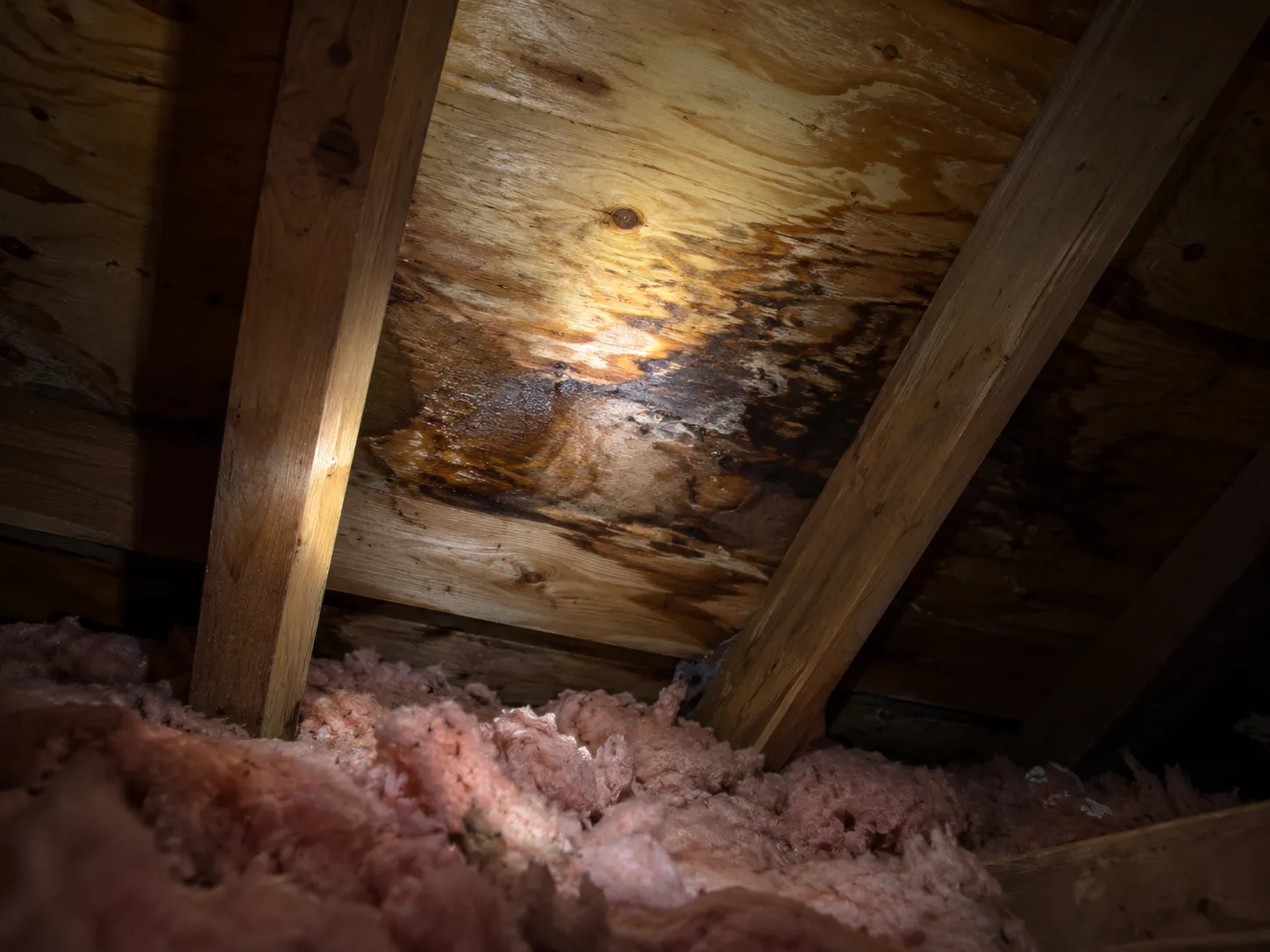
What to look for in the attic
Pick a bright day, turn off the attic light and take a flashlight.
-
Daylight coming through the roof boards means there is a gap for water too.
-
Water stains or dark spots on the rafters and the underside of the roof.
-
Damp or flattened insulation, usually right below a leak.
-
Frost on nail tips on a cold morning, which points to poor ventilation and moisture building up.
-
Blocked vents: make sure insulation is not packed against the vents at the edge of the roof.
What to leave to a roofer
Anything that means standing on the roof should go to a professional, along with replacing shingles or flashing, soft or sagging areas, and any active leak. Never go up on a roof that is wet, frosty or windy. If you use a ladder to look at your gutters, set it on firm, level ground and have someone hold it.
The Importance of Gutter Maintenance Before the First Big Storm
Gutters do one job: catch the water coming off the roof and carry it away from the house. During a nor’easter that is a lot of water in a short time. When gutters are clogged, it has nowhere to go.
Here is what happens when gutter maintenance is skipped:
-
Water spills over the front or runs behind the gutter, soaking the fascia board the gutter hangs on. Over time that board rots.
-
Overflow streaks down the siding and pools next to the foundation. In low-lying parts of Sussex County, and under homes with crawlspaces, that standing water becomes damp air and damaged wood.
-
Gutters full of wet leaves get heavy. Add strong wind and they can pull loose from the house.
Timing matters. Inland neighborhoods around Selbyville and Millsboro sit under oaks and pines and get heavy leaf fall in late October and November. Near the beaches, the problem is more often sand and pine needles. Either way, the best time to clean is after most of the leaves have come down and before the first big storm. If you are not sure how often your home needs it, our guide to how often to clean your gutters breaks it down.
How to winterize gutters
-
Scoop out leaves, pine needles and sand.
-
Run a hose down each downspout. Water should come out the bottom quickly.
-
Make sure every downspout empties at least a few feet away from the house, using an extension or splash block if needed.
-
Tighten any loose hangers or brackets.
-
Look for drips at corners and seams, and reseal them.
-
Check that water does not sit in the gutter after the hose test. Standing water means the slope is off.
If you have gutter guards
Gutter guards keep leaves out, but they are not zero-maintenance. Fine debris like pollen, roof grit and sand can settle on top of a mesh guard. Once a year, rinse the guards with a hose from the ground and check the downspouts and corners, where debris tends to collect.
Where the Roof Meets the Gutter
If you only have time to check one part of your house before winter, make it the roof edge. Three things meet there: the bottom row of shingles, the drip edge (a metal strip that steers water off the roof and into the gutter), and the fascia board the gutter is fastened to. When any one of them fails, the other two start failing with it.
A typical chain goes like this. A clogged gutter overflows, or a missing drip edge lets water run behind the gutter. The fascia board stays wet and begins to rot. The gutter’s fasteners lose their grip, the gutter tilts, and even more water goes where it should not. Add nor’easter winds pushing rain up under the edge shingles, and the wood at the bottom of the roof can rot from both sides.
Signs the roof edge needs attention:
-
Peeling paint or dark stains on the fascia board
-
Gutters pulling away from the house or tilting outward
-
Water streaks on the siding right below the gutter
-
Shingles that overhang the gutter too far, or stop short of it
The fix is usually a combination: fascia and soffit repair to replace rotten wood, a new drip edge, and the gutter re-hung on solid boards. If the bottom shingles are damaged too, it may need a roof repair at the same time. Because we work on both roofs and gutters, we look at this edge as one job rather than two.
A Winter Calendar for Delmarva Homes
Winter maintenance is easier when it is spread across the season instead of crammed into one weekend. Here is a simple schedule for homes in Sussex County and nearby Maryland.
|
When |
What to do |
|---|---|
|
Late October to November, after most leaves fall |
Clean and winterize your gutters. Run water through every downspout. Trim branches that touch the roof. Take dated photos of your roof and gutters. |
|
Early to mid November |
Do the ground and attic checks above. If anything needs fixing, book a roofer now, before the first big nor’easter and before schedules fill up. |
|
December to February, after any storm with strong wind |
Walk around the house. Look for shingle pieces in the yard, gutters that have moved, and new stains on ceilings or in the attic. Clear any new pine needles or debris from the gutters. |
|
During a hard cold snap |
Watch for ice sitting in the gutters or long icicles at the roof edge. Both mean water is not draining the way it should. |
|
March |
Do an end-of-season check of the roof, gutters and attic, and schedule any repairs before spring rain and summer storms. |
After a big storm, our Bethany Beach page has a short checklist of what to look for.
If Your Home Sits Empty Over the Winter
Many homes near the Sussex County beaches are second homes that sit empty from late fall to spring. That is when a small roof leak does the most damage, because it can drip for weeks before anyone sees it.
Before you close up for the season:
-
Get the gutters cleaned and the roof checked while you are still around to deal with any repairs.
-
Take “before” photos. Photograph each side of the roof, the gutters, the attic and the top-floor ceilings, with the date showing. If a storm damages the roof later, these make it much easier to show your insurance company what changed.
-
Leave a roofer’s number with whoever has your key.
Then ask a neighbor, friend or property manager to check the house after every major storm. They do not need to go near the roof. A walk around the outside to look for shingles in the yard or gutters hanging loose, and a quick look at the ceilings and the attic for stains or a damp smell, will catch most problems early.
When to Call Us
Call a roofer if you find missing or lifted shingles, a leak, gutters pulling away from the house, or soft wood at the roof edge. It is also worth a call if you simply want a second set of eyes before nor’easter season starts.
The Gutter Pros is a family-owned roofing and gutter company based in Selbyville. We offer a free roof inspection, and because we handle both roofs and gutters, we check them together. If the roof turns out to be near the end of its life, we will explain your roof replacement options plainly so you can decide what makes sense.
Call (443) 880-4813 or request a free roof inspection.